
Use location and timing to determine whether refrigerator condensation is temporary humidity or evidence of a sealing or drainage issue.
Condensation on a Sub-Zero is normal after the door has been open in humid conditions, and it should clear once the door stays closed. If moisture keeps returning, the usual suspects are a gasket gap, a drain problem, wet or overpacked storage, or high room humidity. Note where it appears, check those, and book a diagnosis if it persists.
Some condensation is normal after a refrigerator door has been open for a long time, especially in warm or humid weather. Persistent water on shelves, under drawers, or along one side of the cabinet is different and should be traced to its source.
Condensation is valuable evidence. Before wiping everything dry, note where it appears and whether there is frost on the back wall, water beneath crispers, or moisture around the gasket.
| Symptom | What it can point to | What you can check |
|---|---|---|
| Fogging after a long door opening | Humid room air meeting cold surfaces | Close the door and see whether it clears |
| Droplets along one side | A local gasket gap or fold | Clean and inspect the gasket around its full length |
| Water under the crispers | Condensation or a drain issue | Look for debris or ice only where the model exposes it |
| Wet shelves with a full cabinet | Overloading or wet produce | Reduce the load and dry spills |
| Moisture with unstable temperatures | Seal, airflow, or cooling concern | Check setpoints and note any service message |
Close the door fully and limit unnecessary openings for several hours. If moisture gradually disappears and does not return, the cause may have been a temporary humidity load.
It also helps to think about the room. Warm, humid weather, steam from cooking, or a door held open while you unload groceries all add moisture that the cabinet then has to handle.
If it returns quickly, inspect the door gasket for damage and clean the sealing surfaces. Humid room air entering through a small gap can produce repeated fogging or droplets.
On certain Classic models, the humidity control has Enhanced, Normal, and Low positions that apply to the whole refrigerator zone. Enhanced suits leafy greens and herbs but can cause condensation, and the guidance is to switch to Normal if moisture builds up. Check whether your model has this control before changing anything.
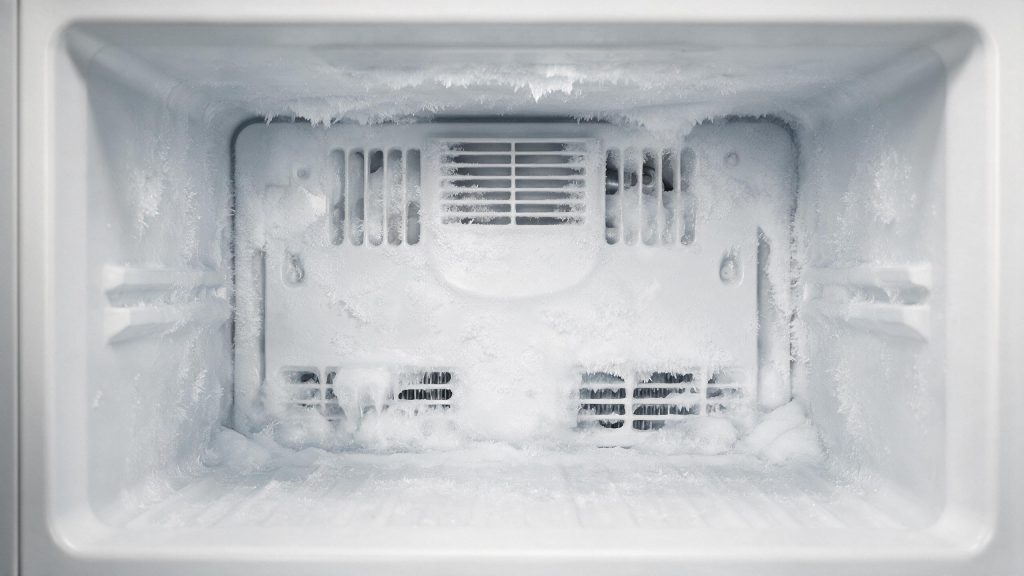
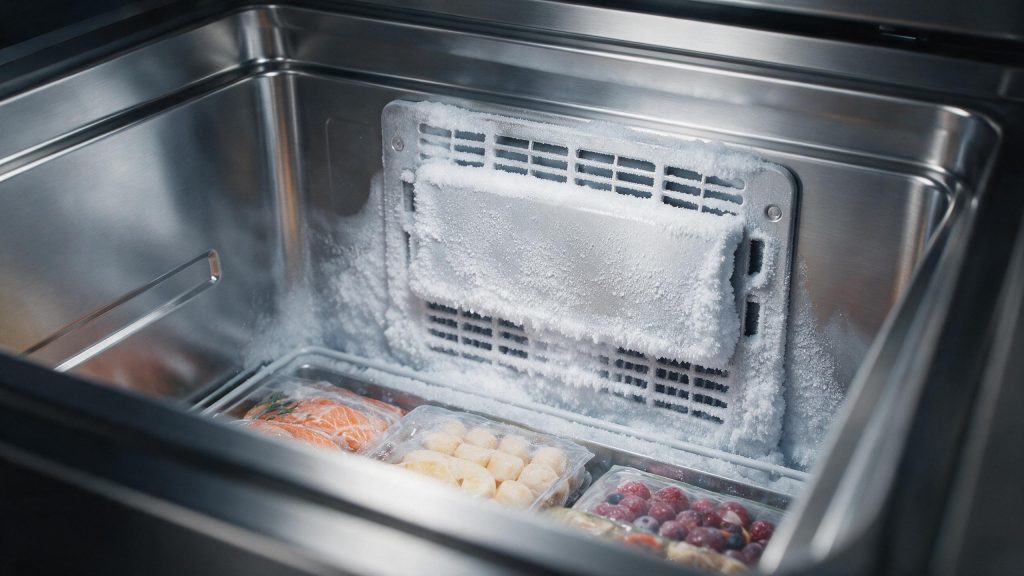
Standing water or ice under crisper drawers can be associated with a drain trough or tube problem on models where those parts are used and accessible. Frost or ice on the rear wall can also point to air leakage, circulation, or drain conditions.
Do not push wire or sharp objects into hidden drains. Drain access and cleaning procedures vary substantially by Sub-Zero series. If water has reached the floor, the question changes from condensation to a leak, and tracing it follows a different path.
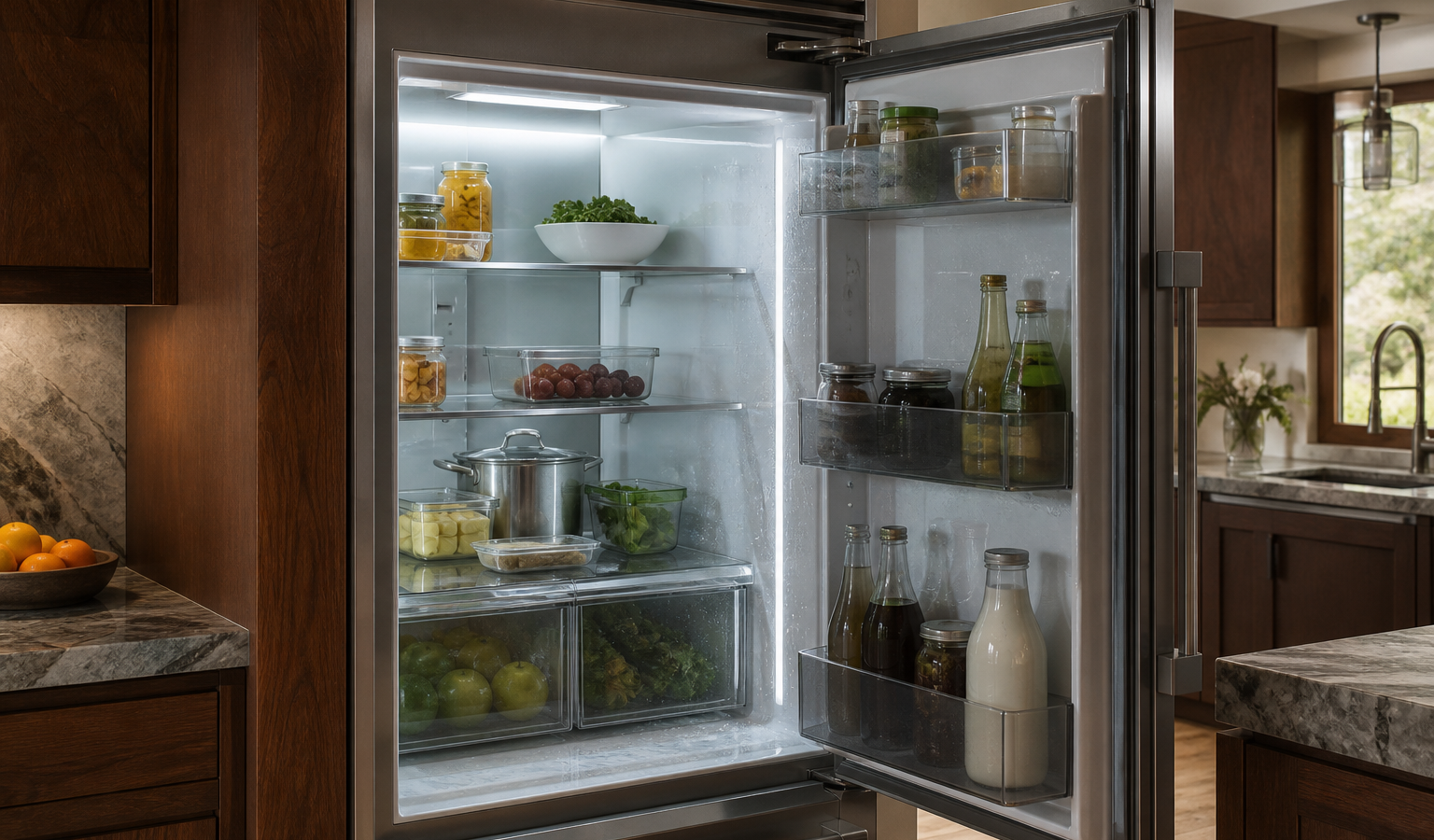
Overpacking the refrigerator can reduce air movement and trap moisture around food. Wet produce and uncovered liquids also add humidity to the cabinet. Reorganize the load so air can circulate and dry obvious spills. Sub-Zero guidance for some models lists overstuffing, wet produce, and high room humidity among the common causes of fridge condensation.
Keep the normal refrigerator setpoint rather than turning the cabinet excessively cold to fight condensation.
Moisture on interior surfaces is usually a humidity or seal issue. Frost on the back wall points more toward airflow or drains, and water pooling on the floor is a leak that needs its source traced. Telling these apart narrows the search, so look at where the water is before wiping it away.
The fact that a gasket looks intact does not always clear it. A thorough clean and dry of the sealing surface can matter, since residue can stop a seal from sitting flat.
Persistent moisture with a good seal and normal use can involve a drain, sensor, fan, or refrigeration issue. Service is also appropriate when water is reaching cabinetry or flooring, or when condensation is paired with unstable temperatures.
Drain access differs by series. The drain trough and tube are visible on some models and not on others, and on some units the drain pan is not accessible at all. The guidance for certain models also says not to push a brush into the tube or disconnect it. If you cannot see the drain on your model, treat that as a reason to book instead of searching.
Be careful about moving the appliance to look underneath. A heavy built-in unit is tied into cabinetry and connections, and the investigation is best left to a technician if the source is not visible.
Yes. Warm room air carries moisture that condenses on cold interior surfaces. It should clear after the door stays closed.
On models that have a humidity control, the highest setting can cause condensation inside the refrigerator zone. Switching back to the normal position is the first thing to try, and it costs nothing.
Yes. A small air leak may show up first as localized moisture or frost before the average cabinet temperature changes significantly.
Depending on the model, a blocked drain or accumulated condensation can collect there and should be inspected using the correct series-specific procedure.
No. A very cold setting can create new problems, such as frozen food, without fixing the moisture source. Keep the recommended setting and trace where the moisture comes from.
Keep the door closed and the load reasonable for a day. If moisture keeps returning in the same place, that pattern is worth reporting.
If the symptom continues after the owner-safe checks above, schedule a professional diagnosis. You can also review our Sub-Zero repair services before booking.
Recurring ice does not automatically prove a failed defrost heater. Door sealing, drains, airflow, and model-specific defrost controls must be considered.
Before replacing a valve or drain part, determine exactly where the water is appearing.
Find the likely source of freezer frost before defrosting or replacing parts.
Share a few details and we’ll confirm an appointment. Prefer to talk? Call us and we’ll help right away.
Fields marked with * are required.