
Use diagnosis, age, condition, and repair history—not a single symptom—to decide whether a Sub-Zero is worth repairing.
Repair or replace comes down to the confirmed fault, the condition of the cabinet and doors, and how far the repair estimate sits from the full cost of replacing a built-in. A Sub-Zero past its 20-year design target can still be worth fixing, and a younger one can be a poor bet. Get the diagnosis first, then compare.
Sub-Zero refrigeration is designed for long service life, so an older unit is not automatically a replacement candidate. At the same time, age alone should not justify a large repair without looking at cabinet condition, repair history, parts availability, and the exact failed system.
The decision becomes much easier after a real diagnosis. Comparing the price of a new appliance with a guessed ‘compressor problem’ is not useful if the actual fault is a gasket, fan, sensor, or control.
| What you see | What it can point to | What you can safely check |
|---|---|---|
| Warm fridge or freezer | Dirty condenser, fan, sensor, door seal, or sealed system | Clean the condenser per your model guide, check the gasket, and note whether one section or both are warm |
| Constant running | Heat load, airflow restriction, or a cooling-system fault | Check door closure, loading, and the grille area; note any Service message |
| Water on the floor | Drain, supply line, or filter | Find the source before moving the unit; shut off the water if it is active |
| Ice or frost buildup | Gasket, drain, defrost, or ice maker issue | Look for door gaps and clear vents; keep the ice bin clean and dry |
| Several faults at once | Broader age or damage pattern | Write down the sequence and repair history for the technician |
Repair often makes sense when the cabinet, liner, doors, and hinges are sound, the failure is isolated, and the part is available.
Consider replacement when several major systems fail together, costly repairs keep recurring, the cabinet or doors are badly deteriorated, or critical parts are unavailable.
A confirmed fault turns a vague worry into a defined repair. Sub-Zero lists fans, temperature sensors or thermostats, the sealed system, and door seals among the causes of warm cooling, and these are very different repairs. A gasket or fan problem sits in another category from a sealed-system fault, so a ‘warm fridge’ label alone says little about the cost or the odds of success.
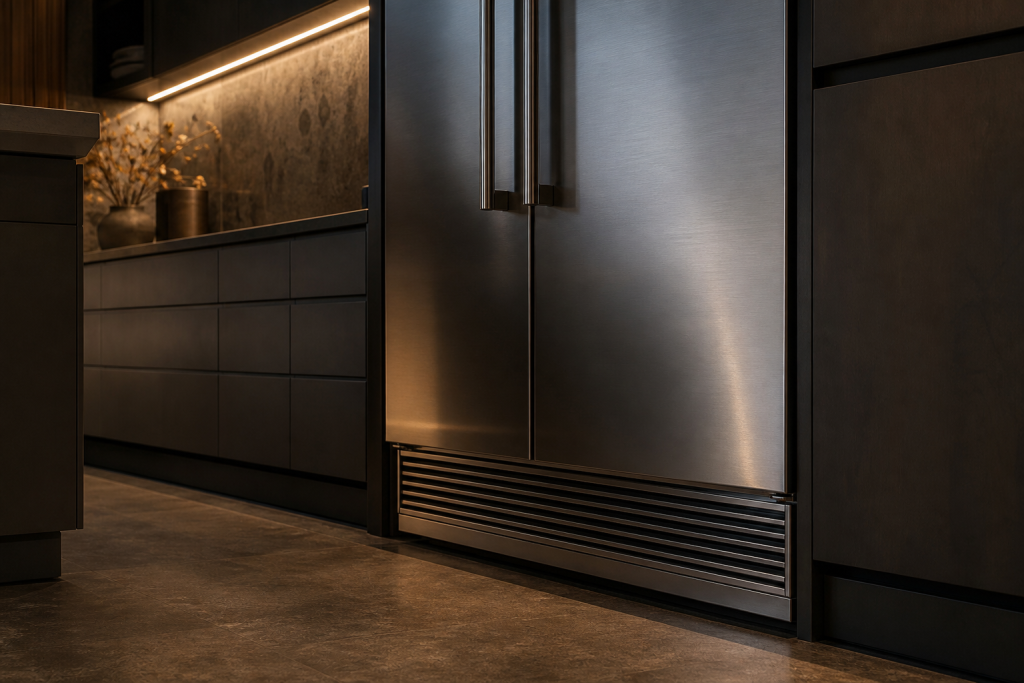
It also helps to separate the failure from its cause. A condenser that went uncleaned or a kickplate covered by cabinetry can stress a cooling system, and if that cause stays in place, a new part may face the same strain.
Sub-Zero states that its products are designed to last about 20 years on average, but real life varies with use, ambient conditions, maintenance, and repair history. Twenty years is therefore a planning reference, not an automatic expiration date.
A well-maintained older refrigerator with one repairable fault can be a better repair candidate than a much younger unit with severe installation or system damage.
With a built-in unit, the price of the appliance is only part of the picture. Panels, trim, ventilation clearance, and the way the unit is set into cabinetry all affect how easy a replacement would be. On the repair side, estimates move with the diagnosis findings, the type of part, how much access the technician needs, and the exact model and serial number.
That is why a quote should name the failed part and the cause before it is compared with anything else.
Ask for the failed component, what caused the failure, whether related components test normally, parts availability, repair warranty, and whether any other major problems were found. Then compare the complete repair estimate with replacement cost and installation impact. Also ask whether the cause of the failure was found, so a new part is not installed into the same problem.
For built-in refrigeration, replacement can include cabinetry, panel, electrical, and water-line considerations that do not appear in the appliance price alone.
One more point favors diagnosis before any decision. Sub-Zero notes that a warm refrigerator reading well above its setpoint is unlikely to be fixed by cleaning alone, which means a clean condenser followed by an unchanged temperature is itself useful information. It tells the technician to look at the fan, sensor, door seal, or sealed system next rather than repeat basic maintenance.
No. Age is one factor. Condition, diagnosis, parts availability, repair history, and replacement complexity matter as much or more.
No. A compressor or sealed-system repair can be significant, but the decision depends on the exact model, overall condition, parts support, and total estimate.
Ask for the confirmed failure, repair scope, parts availability, total estimate, and whether any other major systems show problems.
Yes. A unit that is tightly fitted into custom cabinetry may be harder to swap, while one with blocked airflow may keep failing after a repair. Ask the technician whether the installation contributed to the fault.
Not by itself. A single repair on an otherwise sound cabinet is different from a run of repairs on a unit with worn doors and liner damage. Look at the overall pattern rather than the latest invoice.
If you need a diagnosis before making the decision, review our Sub-Zero repair services or request an appointment.
Sub-Zero's published design target is about 20 years on average, but real lifespan varies widely with use, maintenance, installation, and repair history.
Clicking and buzzing are not diagnoses by themselves. The useful clues are when the sound happens, where it comes from, and whether cooling changed.
Lights can turn off while cooling continues, so first determine whether the problem is lighting-only or a wider power issue.
Share a few details and we’ll confirm an appointment. Prefer to talk? Call us and we’ll help right away.
Fields marked with * are required.