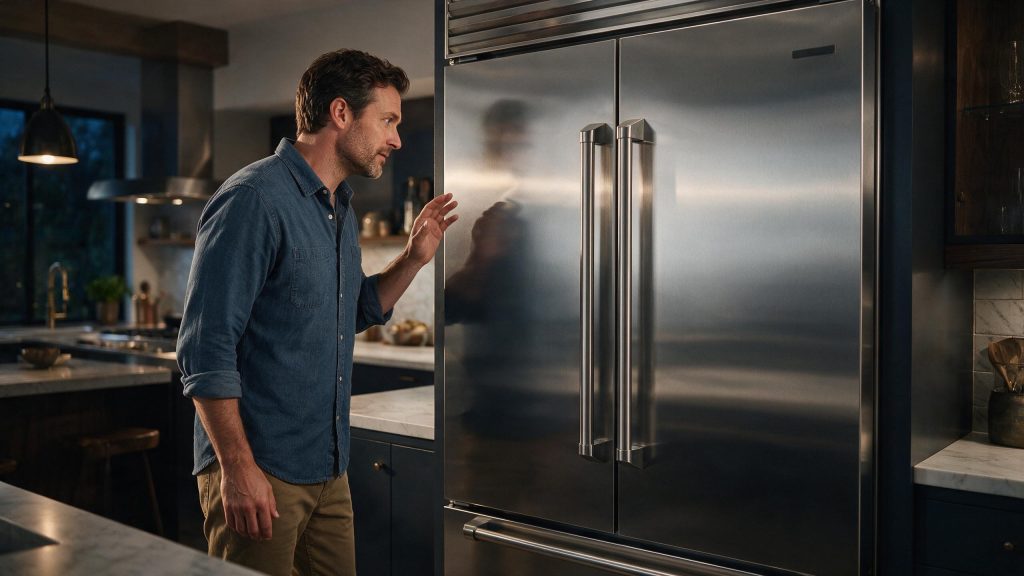

Clicking and buzzing are not diagnoses by themselves. The useful clues are when the sound happens, where it comes from, and whether cooling changed.
Clicking or buzzing from a Sub-Zero is often a normal operating sound, but a new, louder, or worsening noise that comes with warm temperatures is not. Start by opening the doors to see whether the sound stops, then note where it is loudest. A sound that has been there for years with normal cooling is a different case from one that just started.
Sub-Zero lists clicking, buzzing, humming, vibration, and other sounds among noises that can occur during normal refrigeration operation. The same words can also describe a fan hitting ice or a component struggling to start, so context matters.
A new sound that appears with warm temperatures deserves more attention than a brief sound that has been present for years with normal performance.
| Symptom | What it can point to | What you can safely check |
|---|---|---|
| Buzzing that stops when a door opens | Evaporator fan or airflow, or a fan touching ice | Look for visible frost or packaging near the vents, and keep them clear |
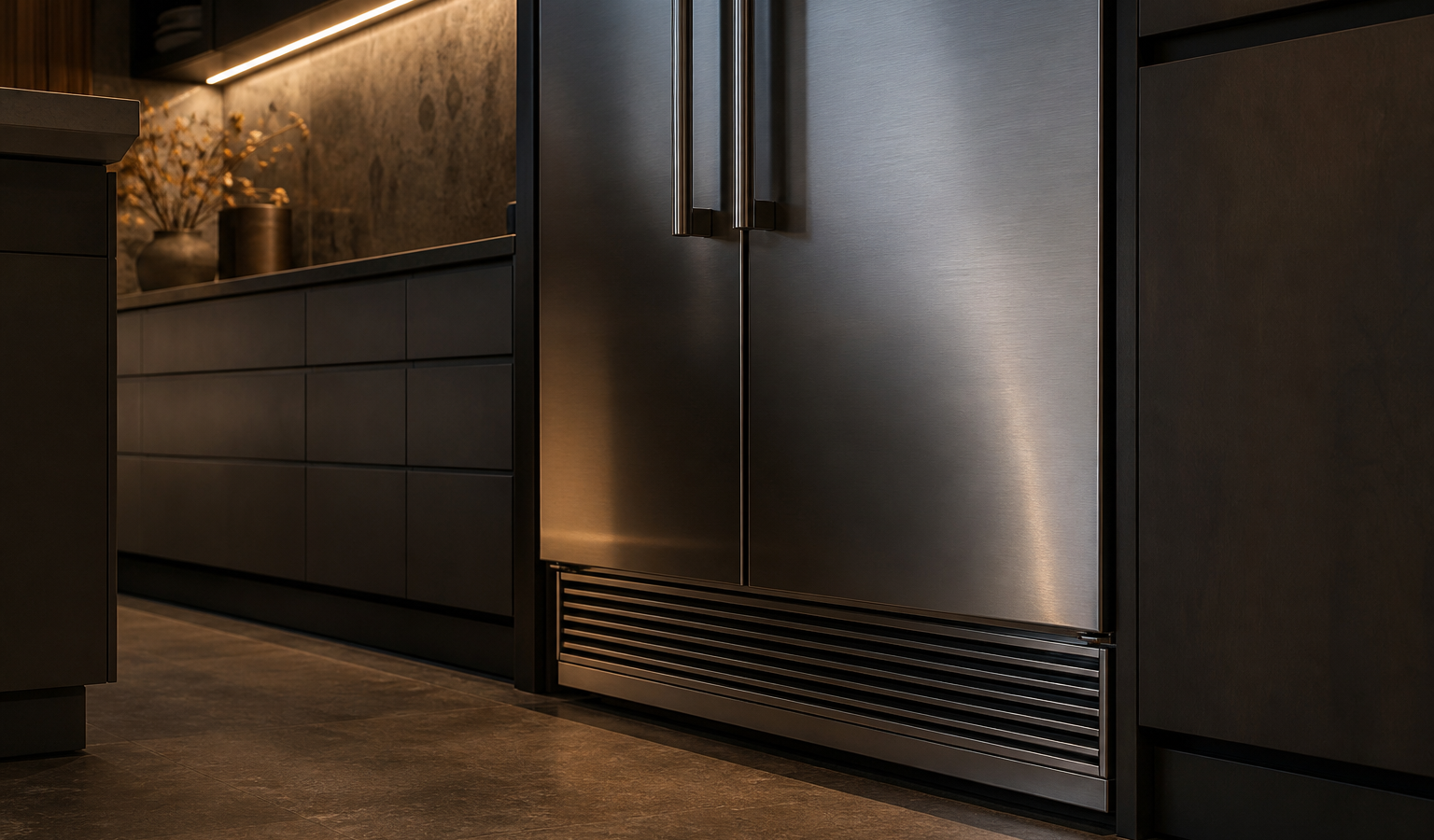
| Buzz that continues with doors open | Compressor-area or condenser fan sound | Notice whether it is strongest near the grille |
| Soft clicking about every 2-3 hours | Ice maker or water valve operating | Compare the timing with the ice maker cycle |
| Rattle or vibration | Items or shelves touching, or a loose trim piece | Separate bottles, reseat drawers, check accessible trim |
| Buzz from lighted shelves | Shelf not seated against its sensor on some models | Reseat the shelf fully |
If opening the doors stops the noise, a compartment fan or airflow condition is more likely. A fan can buzz against ice or packaging, and a failing fan motor may change pitch before temperature problems become obvious.
If the sound continues with doors open, listen for whether it is strongest near the grille or compressor area.
Sub-Zero lists banging, buzzing, clicking, rattling, vibration, humming, and fan noise among sounds it considers normal, and notes they are easier to hear in open-concept homes and at night. A sizzling or crackling sound during a freezer defrost is also normal. Water-related sounds such as gurgling or hissing are generally drainage or evaporator activity, and a whoosh when a door closes is air moving through the drain lines. On wine models, clicking can be a solenoid valve switching between sections.
Several parts can produce a sound that is easy to mistake for the compressor. Condenser fan noise is often confused with compressor noise. An air-purification fan can add sound when the refrigerator door is closed on models that have one. On Classic and Designer models with lighted shelves, a shelf that is not seated against its sensor can buzz. The ice maker and water valve also make a noise about every two to three hours, which is normal.
To isolate a fan, open all the doors first. If the noise continues, a fan is unlikely to be the source. Then close only the refrigerator door, and then only the freezer door, to narrow down the evaporator fan.
Normal relays, valves, fans, and compressors can create short operating sounds. Clean the condenser if maintenance is due and monitor whether the noise changes as the refrigeration cycle changes.
Repeated clicking with a refrigerator that is not cooling normally needs professional diagnosis. Do not repeatedly power-cycle the appliance to make the click disappear.
On models with two compressors, both can run together, which can make the sound seem constant even when nothing is wrong. Sub-Zero lists two compressors on several combination and larger models, and one on single-section units.
Separate bottles or containers that touch, seat shelves and drawers fully, and check for a loose accessible grille or trim piece.
Arrange service when the noise becomes progressively louder, is accompanied by warm temperatures, occurs with a burning odor, or appears to come from a fan striking ice. Those combinations are more meaningful than the word ‘buzzing’ alone.
If a noise stops when a door opens, that points toward a fan or airflow but does not say whether the fan is failing or just touching ice. If the noise continues, it narrows things toward the compressor area but does not say the compressor is at fault. A burning odor alongside any sound means contact service rather than keep testing.
Warm temperatures plus a sound change are the combination that matters. Sub-Zero advises cleaning the condenser first when a noise is loud, new, or worsening, and moving to service if the performance change or the noise remains afterward.
Some buzzing and humming can be normal. A new or worsening sound paired with poor cooling is more concerning.
That often points toward the evaporator fan or airflow because the fan may stop when the door opens.
Ice near a fan can contact the blade and create noise. The underlying moisture or defrost cause should also be corrected.
On models with an ice maker, the water valve and ice maker cycle about every two to three hours, and the click or hum that goes with it is normal. If the sound comes with warm temperatures or no ice, check the ice maker guide for your model.
If cleaning is due, it is a reasonable first step, since Sub-Zero suggests it when a noise is loud, new, or comes with a performance change. If the sound remains, schedule a diagnosis.
If the symptom continues after the owner-safe checks above, schedule a professional diagnosis. You can also review our Sub-Zero repair services before booking.
Use the sound pattern, door position, temperature, and condenser condition to narrow down a noisy Sub-Zero refrigerator.
Sub-Zero's published design target is about 20 years on average, but real lifespan varies widely with use, maintenance, installation, and repair history.
Use diagnosis, age, condition, and repair history—not a single symptom—to decide whether a Sub-Zero is worth repairing.
Share a few details and we’ll confirm an appointment. Prefer to talk? Call us and we’ll help right away.
Fields marked with * are required.