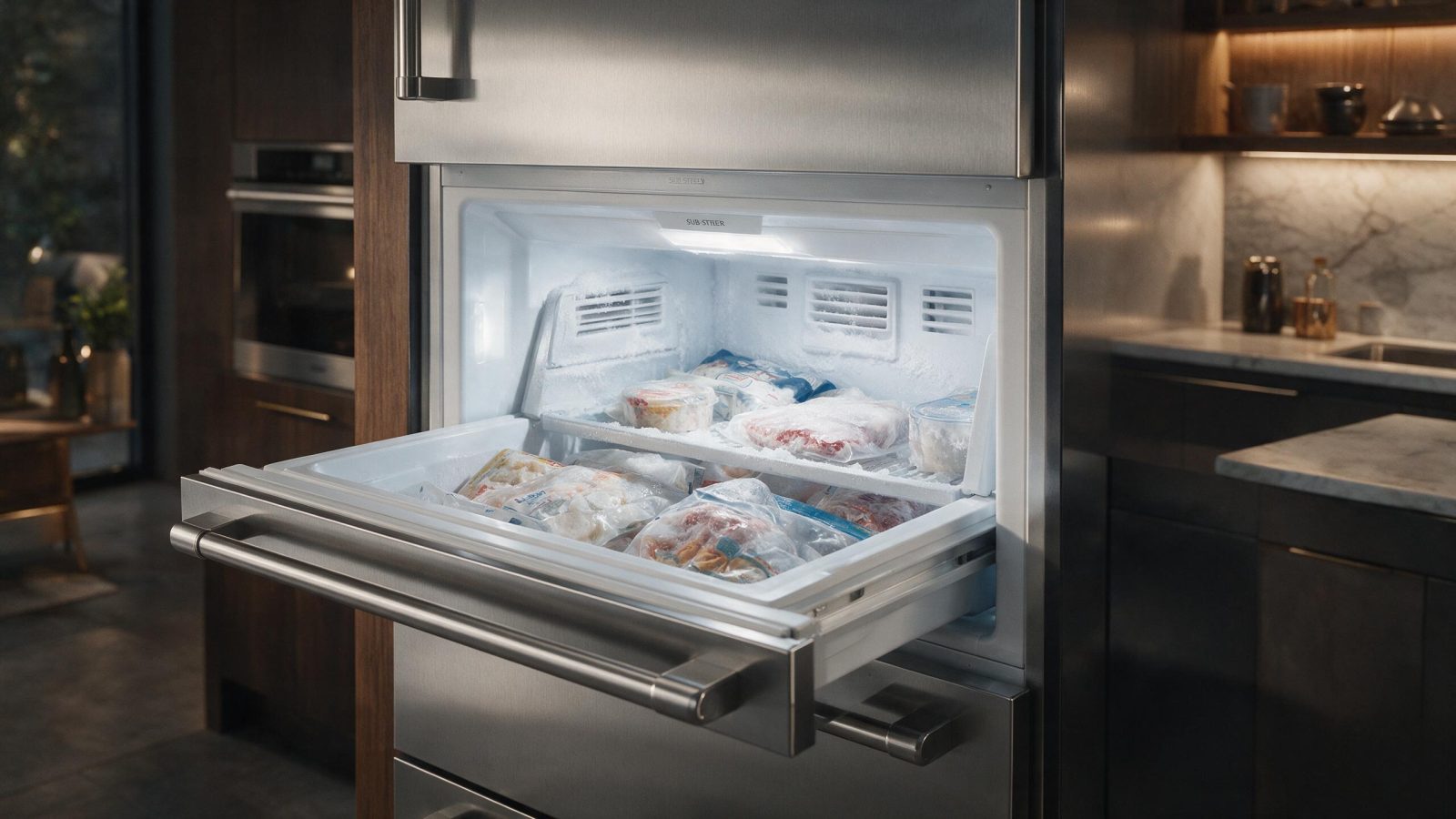

A practical checklist for a Sub-Zero freezer that is softening food or failing to hold its normal temperature.
A freezer can be running without actually reaching freezing temperature. The important question is whether the problem followed a door-left-open event or heavy loading, or whether temperatures keep climbing with no obvious external cause.
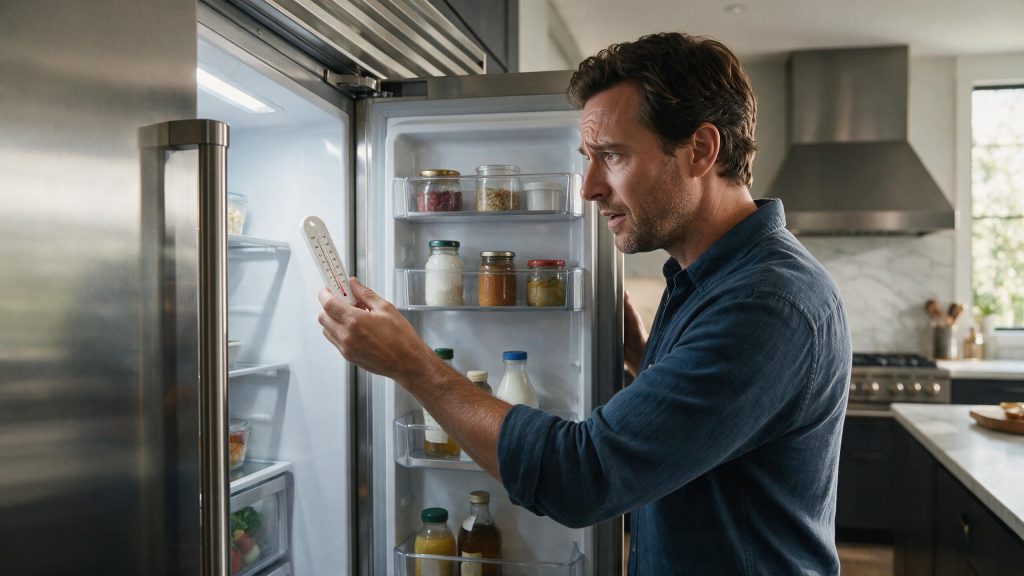
For most electronically controlled Sub-Zero refrigeration, 0°F (-18°C) is the normal freezer setpoint. Ice cream softness alone is not a precise temperature test, so use the display and, when needed, a reliable appliance thermometer to judge the trend.
Warm food recently loaded into the freezer can raise temperature temporarily. Once loading and door issues are corrected, allow the system time to recover.
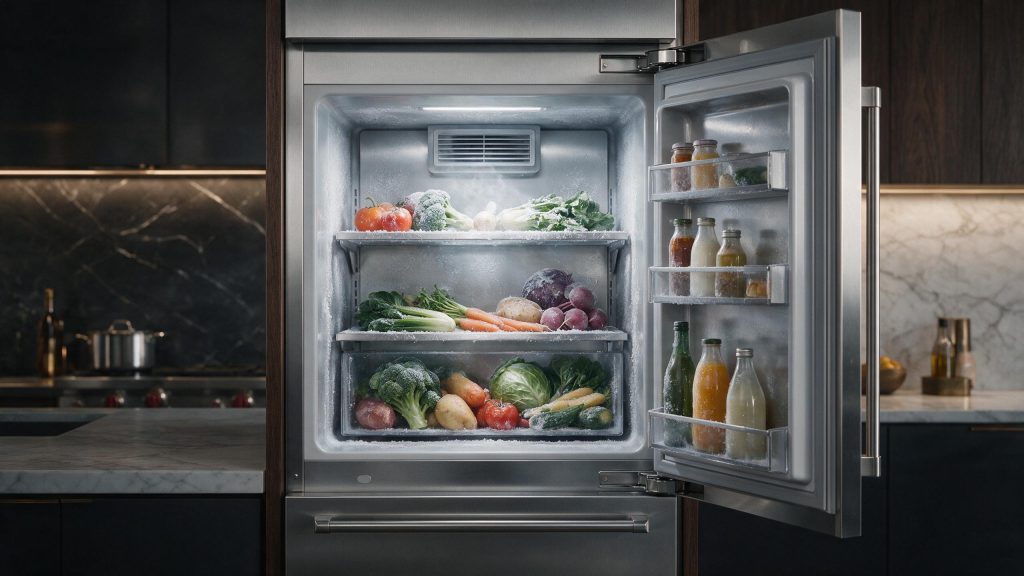
Heavy frost can block airflow even though the refrigeration system is still producing cold. Frost after a door was left ajar may be a one-time moisture event, while frost that keeps returning can be associated with a gasket, drain, ice-maker fill, fan, or defrost problem.
If you can see thick frost near the fan cover or back wall, do not chip it away with a knife or screwdriver. Use only model-appropriate defrost instructions and protect food while the unit is off.
A freezer that runs for long periods but does not pull down to temperature may simply be struggling to reject heat. If condenser maintenance is overdue, clean it according to the model-specific procedure and then monitor the freezer for up to 24 hours.
If the temperature is substantially above the setpoint and continues to rise, do not rely on condenser cleaning alone. That pattern deserves professional diagnosis.
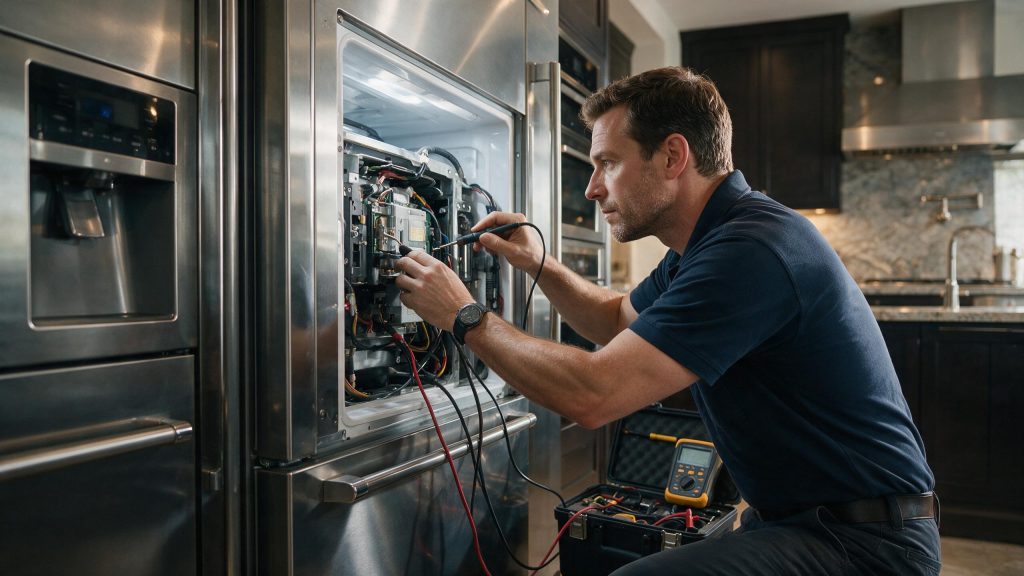
Persistent warmth with a good door seal, clean condenser, and unobstructed airflow can be caused by a fan, sensor, control, compressor, or sealed-system fault. These parts require testing and should not be bypassed or serviced as a DIY electrical or refrigerant repair.
For electronic controls, 0°F (-18°C) is the standard recommended setting.
Yes. Warm, humid air can raise cabinet temperature and create frost that restricts airflow. Correct the door issue, then allow time for recovery.
After correcting a door, airflow, loading, or condenser issue, monitor temperatures for up to 24 hours. If the freezer keeps warming, arrange service sooner.
If the symptom continues after the owner-safe checks above, schedule a professional diagnosis. You can also review our Sub-Zero repair services before booking.
Food freezing in the refrigerator section is usually a control or airflow problem—not a reason to keep raising the setpoint blindly.
Do not condemn a Sub-Zero compressor based on sound or run time alone. Several simpler faults can produce the same symptoms.
Separate normal short-term temperature movement from a refrigerator that truly cannot hold its setpoint.
Share a few details and we’ll confirm an appointment. Prefer to talk? Call us and we’ll help right away.
Fields marked with * are required.