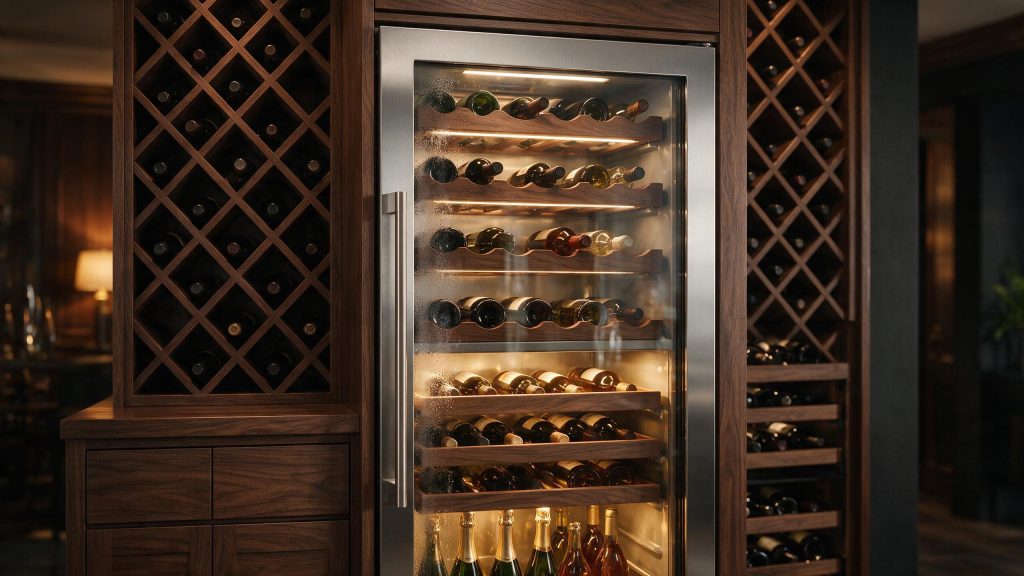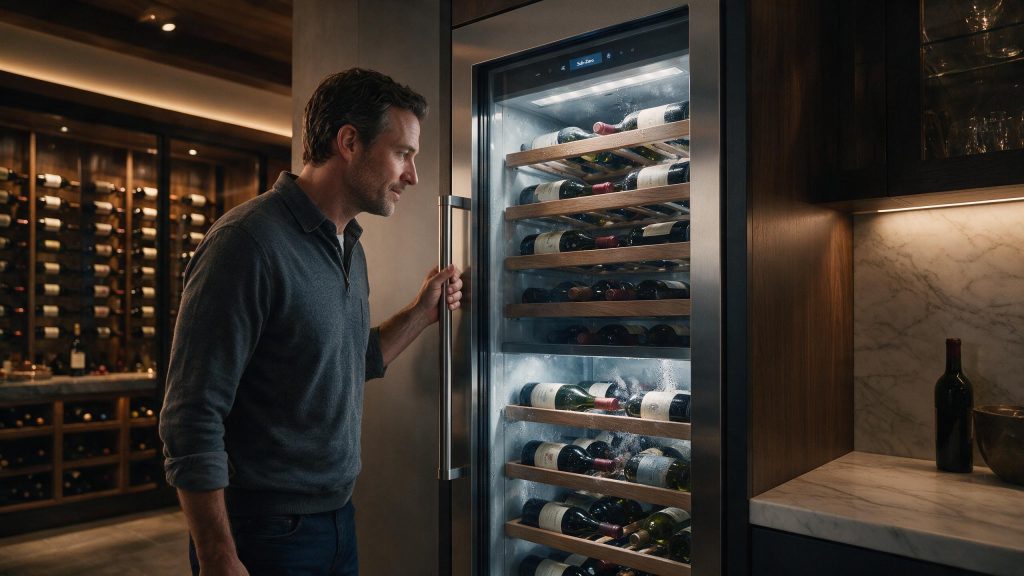
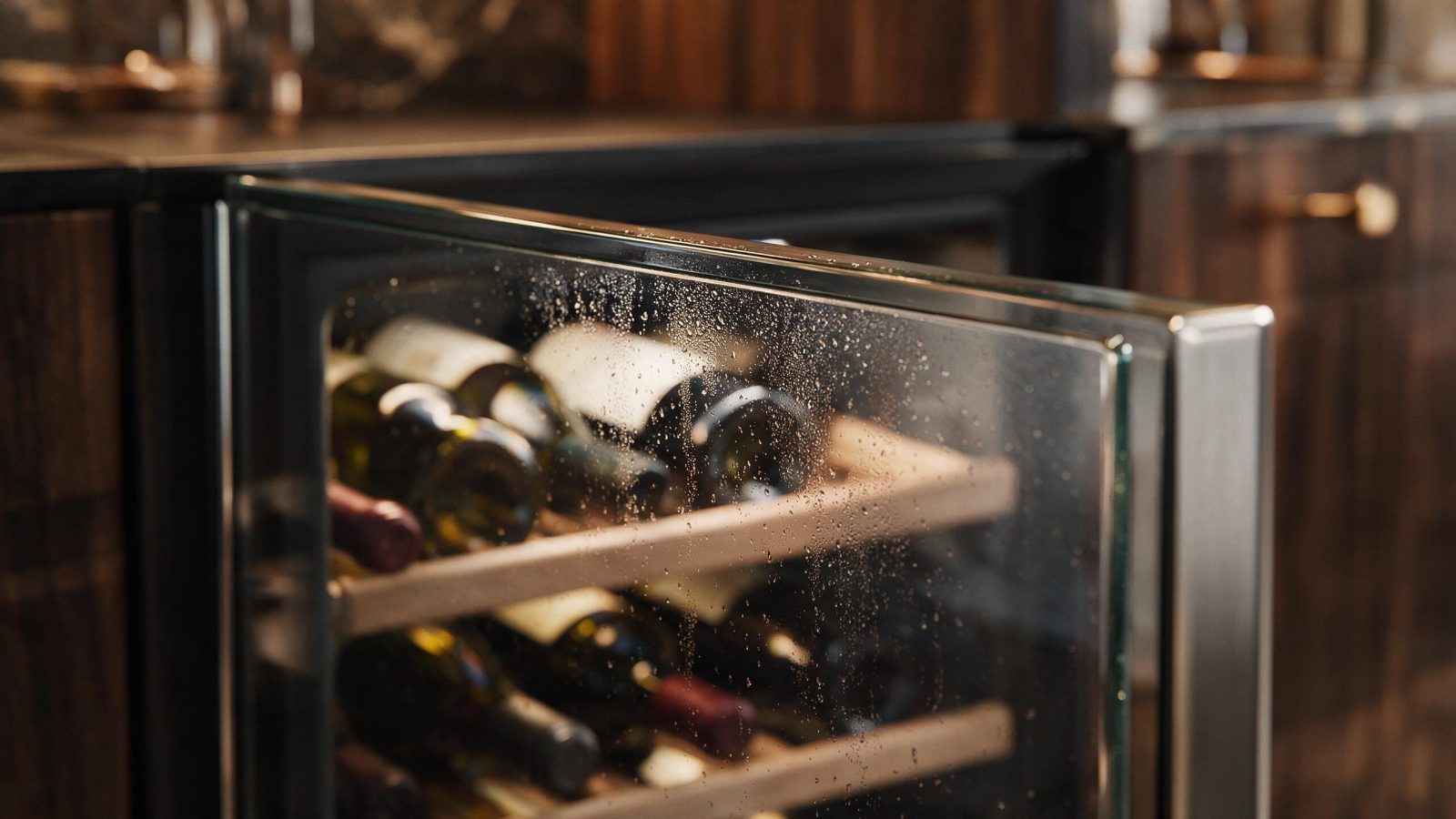

Moisture on bottles or glass can be temporary humidity, but recurring condensation should be checked before labels and cabinetry are damaged.
Wine Storage operates cold enough that humid room air can condense quickly when the door is opened. A brief fog that clears after the door stays closed is different from persistent droplets, wet labels, or water collecting in the cabinet.
Location matters: moisture concentrated around the door points toward sealing, while widespread interior humidity can reflect environment, loading, or a cooling issue.
If the door was open while bottles were loaded or inventoried, close it and allow the cabinet to run normally. In humid conditions, visible fogging can take time to clear.
Repeated short checks can keep reintroducing moisture, so evaluate the result after a sustained closed-door period.
Look for tears, folds, residue, or a section of gasket that does not contact the cabinet. Clean and dry both the gasket and the sealing surface.
A torn or permanently deformed gasket should be replaced rather than sealed with adhesive.
Sub-Zero specifically includes condenser cleaning among owner checks for excessive Wine Storage moisture. Restricted heat rejection can increase run time and contribute to unstable cabinet conditions.
Also keep bottles and labels from interfering with door closure or airflow.
If condensation remains excessive with a clean condenser, good gasket, and normal door use, professional diagnosis is appropriate. Service may need to evaluate cooling performance, sensors, fans, or a hidden moisture source.
No. Some condensation can appear after the door has been open, especially in warm or humid conditions.
Persistent humid air leakage can create moisture on bottles and labels, so gasket condition matters.
Not automatically. Solve the moisture or sealing cause instead of using an unnecessarily cold setpoint.
If the symptom continues after the owner-safe checks above, schedule a professional diagnosis. You can also review our Sub-Zero repair services before booking.
Wine Storage temperatures should be judged by zone behavior over time, not by one quick reading after the door has been opened.
Warm wine storage can come from settings, door sealing, condenser airflow, fans, sensors, or the refrigeration system.
Sub-Zero's published design target is about 20 years on average, but real lifespan varies widely with use, maintenance, installation, and repair history.
Share a few details and we’ll confirm an appointment. Prefer to talk? Call us and we’ll help right away.
Fields marked with * are required.