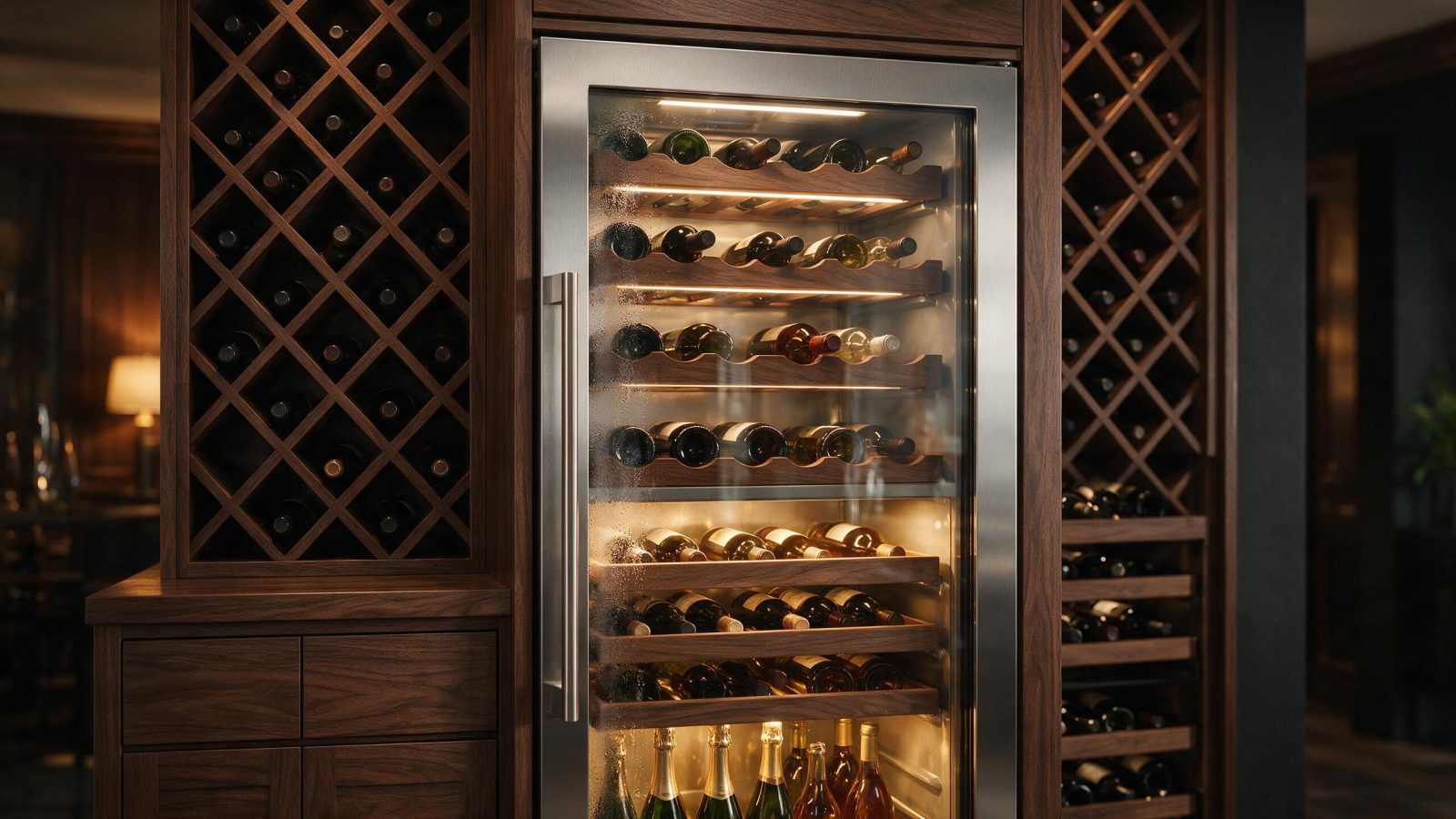

Wine Storage temperatures should be judged by zone behavior over time, not by one quick reading after the door has been opened.
Wine unit temperature problems usually fall into one of three patterns: a zone that is warmer than its setpoint, two zones that do not match what you chose, or a display that looks fine while the bottles change slowly. Work out which pattern you have, then check the settings and the door before suspecting a fault. Many zones can be set independently, so a difference between them is not automatically a problem.
Temperature complaints in a wine unit can mean several different things: a zone may be warmer than its setpoint, the two zones may not match each other, or the display may appear stable while bottle temperature changes slowly. Start by defining which of those patterns you actually have.
Sub-Zero Wine Storage is designed for adjustable wine temperatures rather than a single food-refrigerator setpoint, so compare each zone with its intended setting.
| Symptom | What it can point to | What you can safely check |
|---|---|---|
| One zone warm, other normal | Zone-specific airflow, sensor, or a recent setting change | Confirm both setpoints and note which zone is off |
| Both zones warm | Door seal, condenser, ventilation, or a cooling fault | Check the gasket and clean the condenser per your model’s guide |
| Display normal, bottles slow to change | Normal thermal lag after loading | Evaluate after a sustained closed-door period |
| Reads like 45°F or 55°F but no cooling | Showroom Mode on some Designer models | Check for a Showroom message on the display |
| Service flashing | Cooling or sensor condition | Turn the unit off and back on once; if it repeats, note it for service |
Check each selected temperature and make sure the controls have not been changed accidentally. Confirm the door closes completely and that bottles, shelves, or labels do not interfere with sealing.
Zone settings are easy to nudge by accident, especially on touch panels that wake with a brush of the hand. Compare what the display says each zone is set to with what you intended before treating a difference as a cooling fault.
After a large loading change or a setpoint adjustment, give the system adequate time to settle. If the display seems to disagree with a thermometer, remember that air temperature moves faster than bottle temperature.
Sub-Zero lists a range of about 39 to 65°F for Designer models (IW, DET, DEC), Classic models (BW, CL), and the UW-24, though the exact figure may vary with serial number and age. Wine drawers on one Designer model, the 427R, use a different range of 34 to 45°F. Sub-Zero’s warm-unit guide gives 34 to 65°F for electronic-panel wine units. These differences matter because a number that looks wrong on one model may be perfectly valid on another.
Sub-Zero also notes that red and white wine can go in either zone, so the zones are not tied to a wine type. A zone set higher than the other is a normal choice, not a sign of a problem.
Frequent door openings can make air temperature jump while the wine itself changes more slowly. Evaluate the unit after a period of normal closed-door operation rather than immediately after reorganizing bottles.
Bottle temperature lags air temperature, so a quick reading right after the door has been open describes the air, not the wine. A steadier picture comes from several checks spread across a day with the door closed in between.
If one zone consistently differs while the other behaves normally, note that before service.
A newly installed unit may cool only one zone at first, and Sub-Zero advises waiting 24 hours before concluding anything. Adding a large batch of room-temperature wine raises the temperature reading as well, which is expected. Judging by the display immediately after loading tends to overstate the problem.
Clean the condenser if it is due, keep ventilation openings clear, inspect the gasket, and consider a warm room. Listen for abnormal fan or compressor noise.
A unit that never reaches setpoint with a clean condenser, good gasket, and normal room conditions is the case worth a diagnosis, and a room that is much warmer than usual is worth noting when you call.
Persistent failure to reach setpoint can involve a fan, sensor, control, door seal, compressor, or sealed-system problem. The exact cause requires model-specific testing; avoid replacing a sensor or control board from symptoms alone.
A wine unit that shows 45 and 55°F but is not actually cooling may be in Showroom Mode, which disables cooling while the lights and controls keep working. Sub-Zero describes a way to exit it from the settings menu on Designer models, and the method differs by model, so use the guide for yours.
If Service flashes on a wine unit, Sub-Zero’s guidance is to turn it off and on once. A repeat suggests a sensor issue that needs diagnosis,.
Not necessarily. Many Sub-Zero Wine Storage products allow zones to be set independently for different storage preferences.
Yes. A warmer room increases the heat the unit must remove and can make marginal airflow or maintenance problems more obvious.
Allow enough closed-door operating time for the zone to stabilize; after a significant change, monitoring over many hours is more meaningful than an immediate reading.
Yes. A large load of warmer bottles raises the temperature for a while. Judge the unit after a period with the door closed rather than right after loading.
Showroom Mode can do that on some Designer models. Check for a mode message and the exit steps for your model.
If the symptom continues after the owner-safe checks above, schedule a professional diagnosis. You can also review our Sub-Zero repair services before booking.
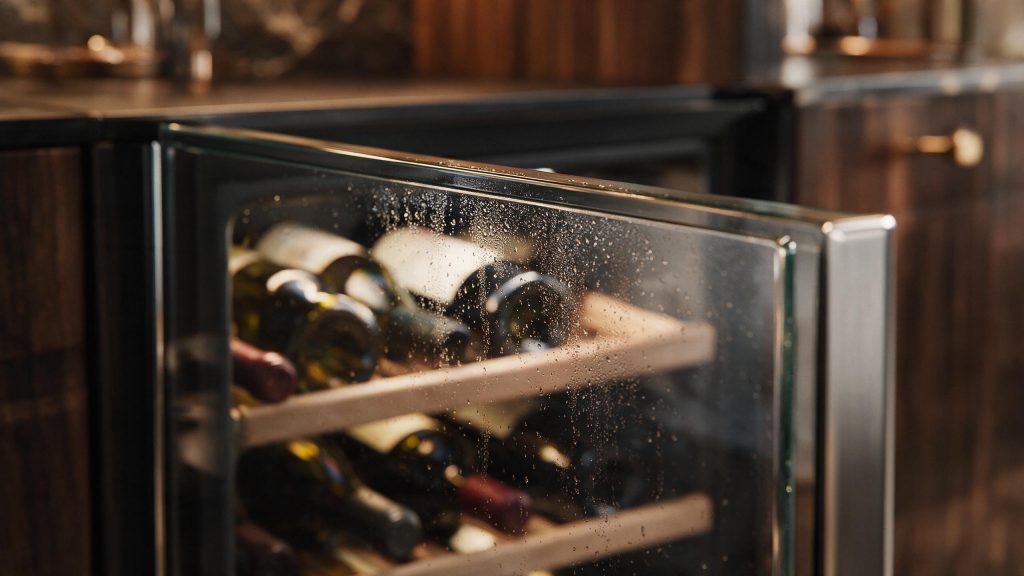
Moisture on bottles or glass can be temporary humidity, but recurring condensation should be checked before labels and cabinetry are damaged.
Warm wine storage can come from settings, door sealing, condenser airflow, fans, sensors, or the refrigeration system.
Sub-Zero's published design target is about 20 years on average, but real lifespan varies widely with use, maintenance, installation, and repair history.
Share a few details and we’ll confirm an appointment. Prefer to talk? Call us and we’ll help right away.
Fields marked with * are required.