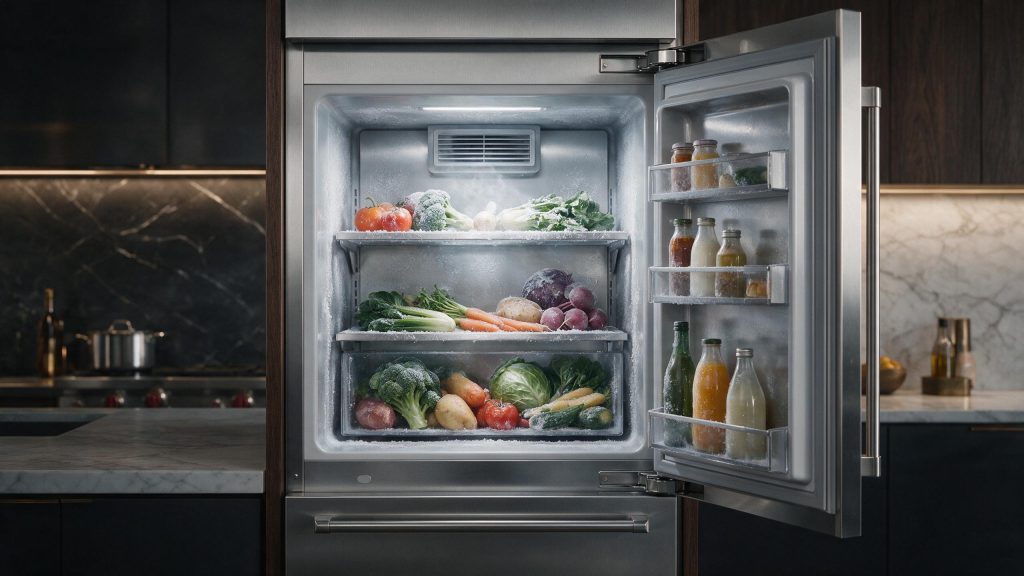


Separate normal short-term temperature movement from a refrigerator that truly cannot hold its setpoint.
A refrigerator temperature is not perfectly flat minute by minute. Door openings, new groceries, compressor cycling, defrost activity, and changing room temperature all affect short-term readings. What matters is whether the cabinet returns to and maintains its intended range.
On electronic-control models, 38°F for the refrigerator and 0°F for the freezer are the usual recommended setpoints. Avoid chasing every short-term change by repeatedly adjusting the controls.
Use the display trend or a suitable refrigerator thermometer over time. Note when the temperature rises: after door openings, overnight, after a large grocery load, or without any obvious trigger.
Allow up to 24 hours after a setpoint adjustment for the new setting to stabilize.
If the freezer remains steady while the refrigerator varies widely, the issue may be local to refrigerator airflow, sensing, or controls. If every zone moves warm together, the cause may be broader.
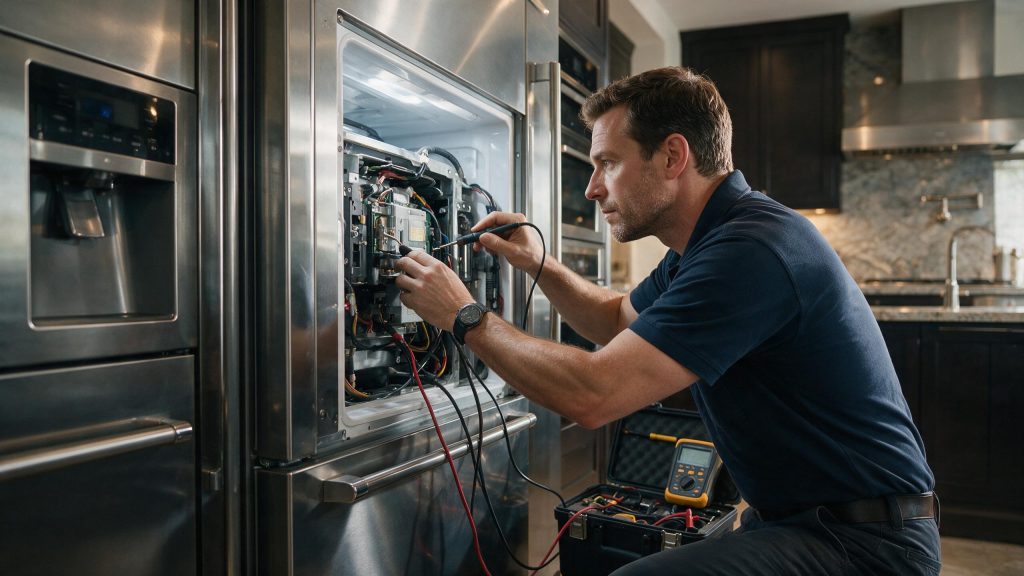
Write down whether an error code, service indicator, fan noise, or long run time appears at the same time. Those clues help a technician test the right circuit.
Large repeated swings, temperatures that do not recover after normal use, or a cabinet that repeatedly moves into an unsafe food-storage range warrant service. Do not use an extreme setpoint to mask the problem.
Warm food adds heat to the cabinet, so a temporary rise can occur until the refrigeration system removes that heat.
Defrost cycles can change internal conditions, although electronic displays may average temperature rather than show every short spike.
No. Use the normal recommended setting and diagnose why the cabinet is not holding it.
If the symptom continues after the owner-safe checks above, schedule a professional diagnosis. You can also review our Sub-Zero repair services before booking.
Food freezing in the refrigerator section is usually a control or airflow problem—not a reason to keep raising the setpoint blindly.
Do not condemn a Sub-Zero compressor based on sound or run time alone. Several simpler faults can produce the same symptoms.
A fan that seems silent with the door open is not automatically failed. Use temperature and airflow symptoms to confirm the problem.
Share a few details and we’ll confirm an appointment. Prefer to talk? Call us and we’ll help right away.
Fields marked with * are required.