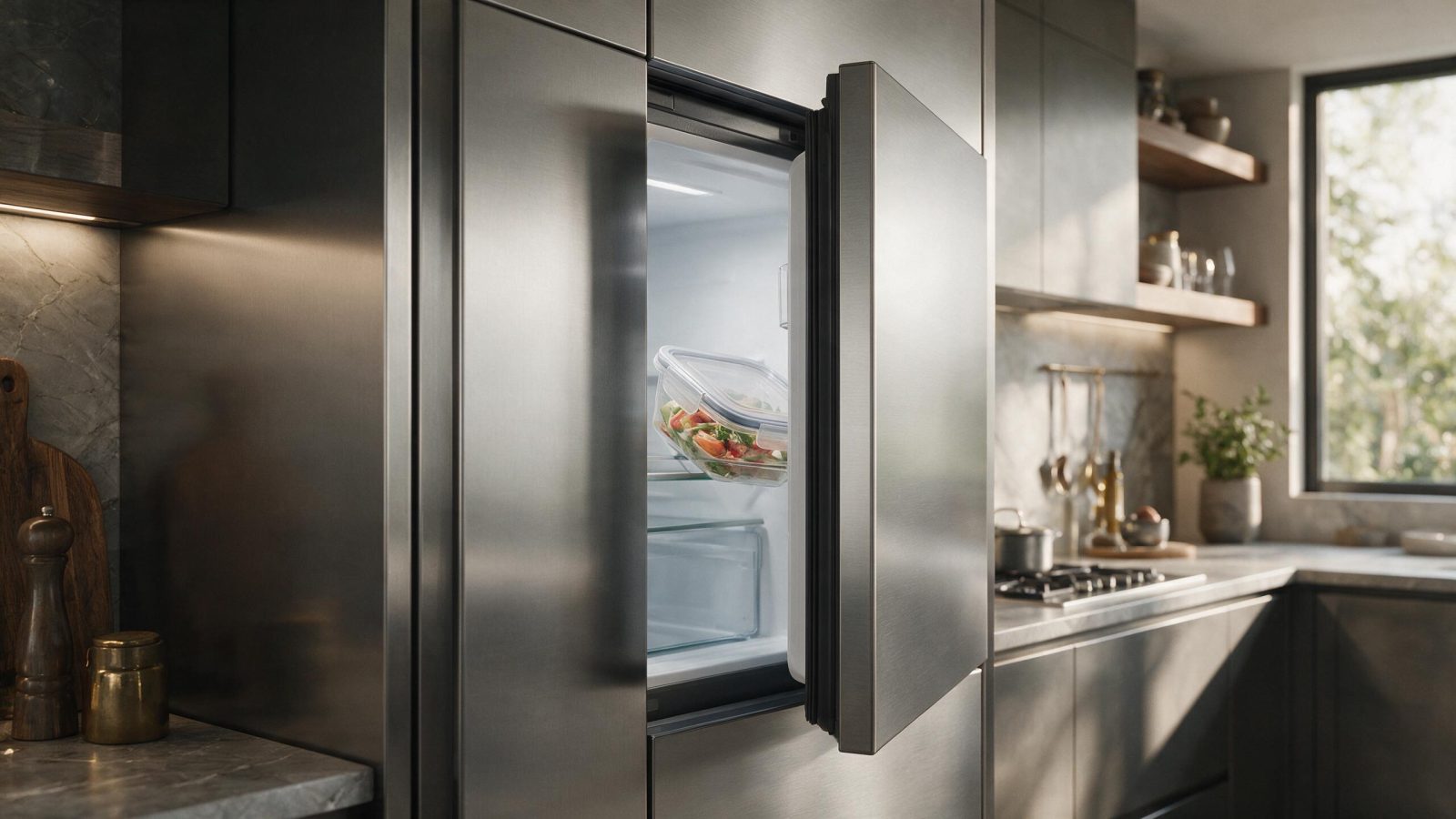

A door-closing problem can quickly become a temperature and condensation problem, so fix the mechanical cause before adjusting cooling settings.
A Sub-Zero door that will not close usually has a visible cause along its path, such as a drawer sitting slightly forward, a misplaced shelf, a protruding package, or a folded gasket. Clear and reseat everything first, then inspect the gasket. If the door still binds with nothing in the way, book an alignment or hinge check.
When a refrigerator door stops closing normally, the problem is usually visible somewhere along its travel path. A drawer may be slightly forward, a shelf may be misplaced, a package may protrude, or the gasket may be folded or damaged.
Repeatedly pushing harder on the door is not a repair. It can worsen hinge, panel, or gasket damage on a heavy built-in door.
| Symptom | What it can point to | What you can check |
|---|---|---|
| Door stops before the end of travel | A drawer, shelf, or package in the way | Reseat drawers and shelves and clear the front edge |
| Door bounces back open | Gasket folded or load pushing out | Smooth the gasket and rearrange items |
| Door feels stiff along its travel | Liner, hinge, or gasket drag | Watch where resistance begins as you close slowly |
| Door closes but gaps at one side | Alignment or installation | Note the gap and avoid loosening hardware |
| Door only closes with force | Hinge wear or a damaged cam | Stop forcing it and arrange service |
Remove anything in the way, reseat drawers and shelves fully, and check that no package protrudes into the door’s travel.
Sub-Zero guidance for a hard-to-close door starts with clearing items, then checking the liner, the gasket, and whether shelves and drawers are fully seated. If the door is still difficult, it points to hinge cracks, missing screws, or broken cams as work for a technician.
Drawers deserve particular attention, since one that is only slightly forward can stop the door well before it reaches the cabinet. Push each drawer fully home and test the door again.
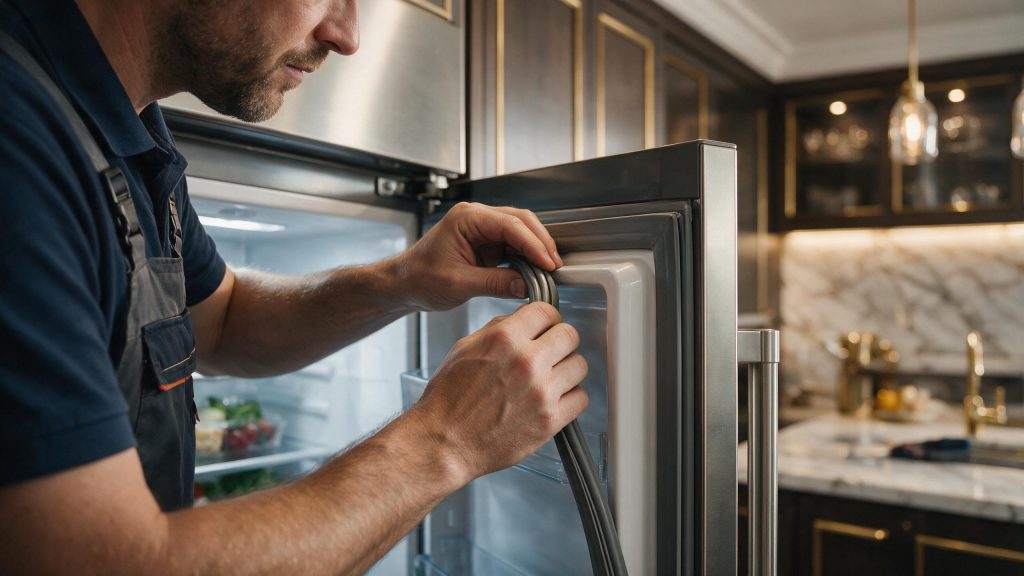
Clean sticky food residue from the gasket and the cabinet contact surface using the care method appropriate for the material. Look for tears, hardened sections, bulges, or a gasket that has pulled out of position. Cleaning also helps new or older gaskets conform, since residue can keep them from sitting flat.
A damaged gasket can prevent closure and also cause condensation, frost, and long run time. Sub-Zero recommends service replacement for torn door or drawer gaskets.
If the gasket looks fine and the door still springs back, the cause may be outside the cabinet, such as a trim piece or custom panel edge touching a neighboring cabinet. Look at the gap around the door rather than only inside.
It can, once the path is clear and the gasket is intact. Hinge condition and installation details differ by model.
On some models the lower hinge has two plastic cams that can wear over time. On Designer units installed side by side, the handle-to-handle trim has to be used as intended. Classic built-in doors can be adjusted at the upper hinge on some models, while over-and-under and French door styles cannot be raised or lowered. Use the installation guide for your model and avoid improvising.
If nothing inside is blocking the door, a hinge, door alignment, custom panel, or cabinet installation issue may be involved. This is especially important on panel-ready products where door weight and panel alignment affect operation.
Do not loosen hinges or panel hardware unless you have the installation instructions and can safely support the door.
A custom panel adds weight and changes how the door hangs, so a panel-ready unit that used to close well can start to bind when the door sags slightly. That is an installer-level adjustment.
An unsealed door allows humid room air into the cabinet. That can raise temperature, create frost, and make the compressors run longer. If the door cannot stay closed after obstructions and gasket issues are ruled out, schedule adjustment.
If the door closes freely after you reseat a drawer, the cause was an obstruction. If it still binds with an empty path and an intact gasket, the cause is likely mechanical, and force will only make it worse. Allow about a day for the cabinet to recover after a door has been left open before judging temperatures.
Yes. A drawer that is not fully seated can interfere with the main door even when the obstruction is not obvious from the front.
No. Forcing it can damage the hinge, the panel, or the gasket. Find what is stopping it instead, and book an adjustment if nothing visible is in the way.
Avoid improvised lubricants. Some plastics can be damaged by products such as petroleum jelly; clean the gasket and follow model-specific care guidance instead.
If the door binds with no interior obstruction or appears misaligned, hinge or installation adjustment may be required.
Close it, clear whatever kept it open, and give the unit about a day to recover. If it does not, schedule a diagnosis.
On Classic models a hinge click or creak is considered normal. Binding, cracks, or a door that needs force are not.
If the symptom continues after the owner-safe checks above, schedule a professional diagnosis. You can also review our Sub-Zero repair services before booking.
A healthy gasket keeps room air out of the refrigerator. Small seal defects can create surprisingly large moisture and temperature symptoms.
Sub-Zero's published design target is about 20 years on average, but real lifespan varies widely with use, maintenance, installation, and repair history.
Use diagnosis, age, condition, and repair history—not a single symptom—to decide whether a Sub-Zero is worth repairing.
Share a few details and we’ll confirm an appointment. Prefer to talk? Call us and we’ll help right away.
Fields marked with * are required.