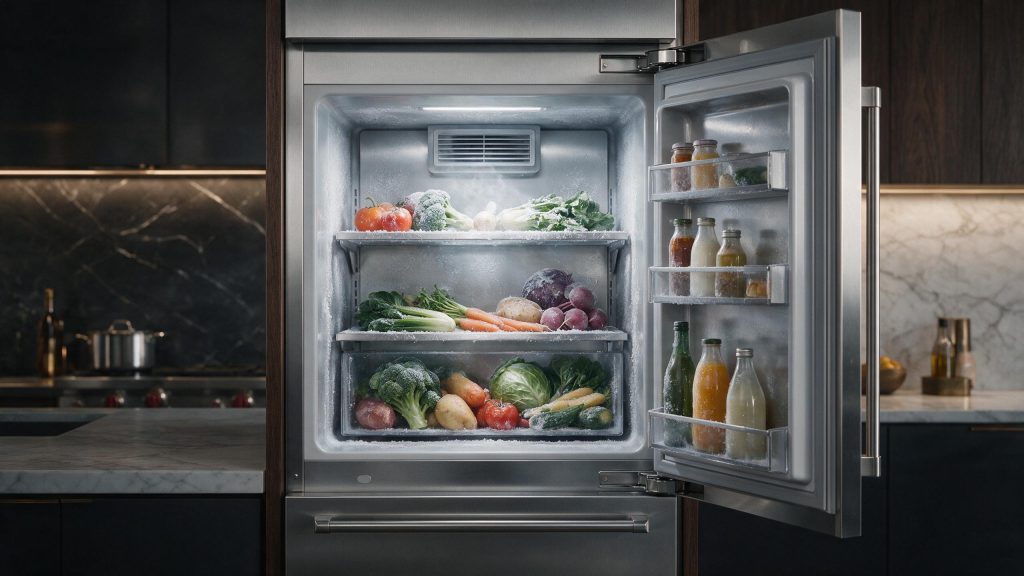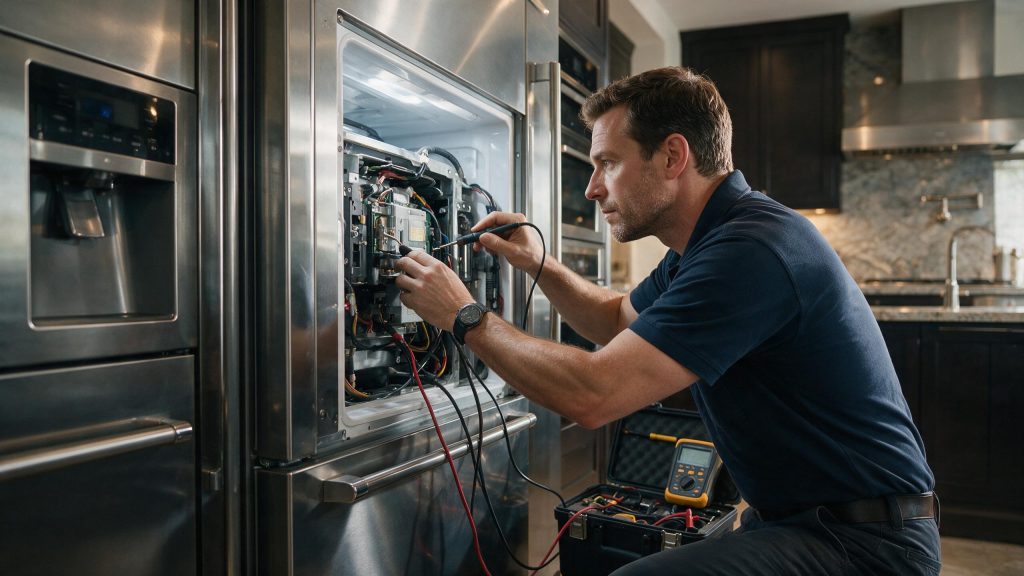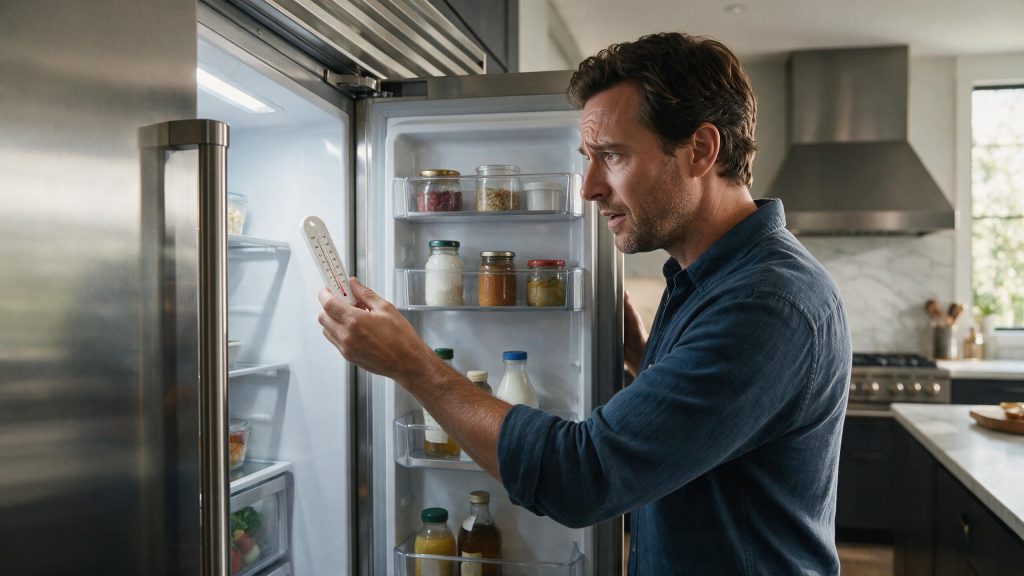
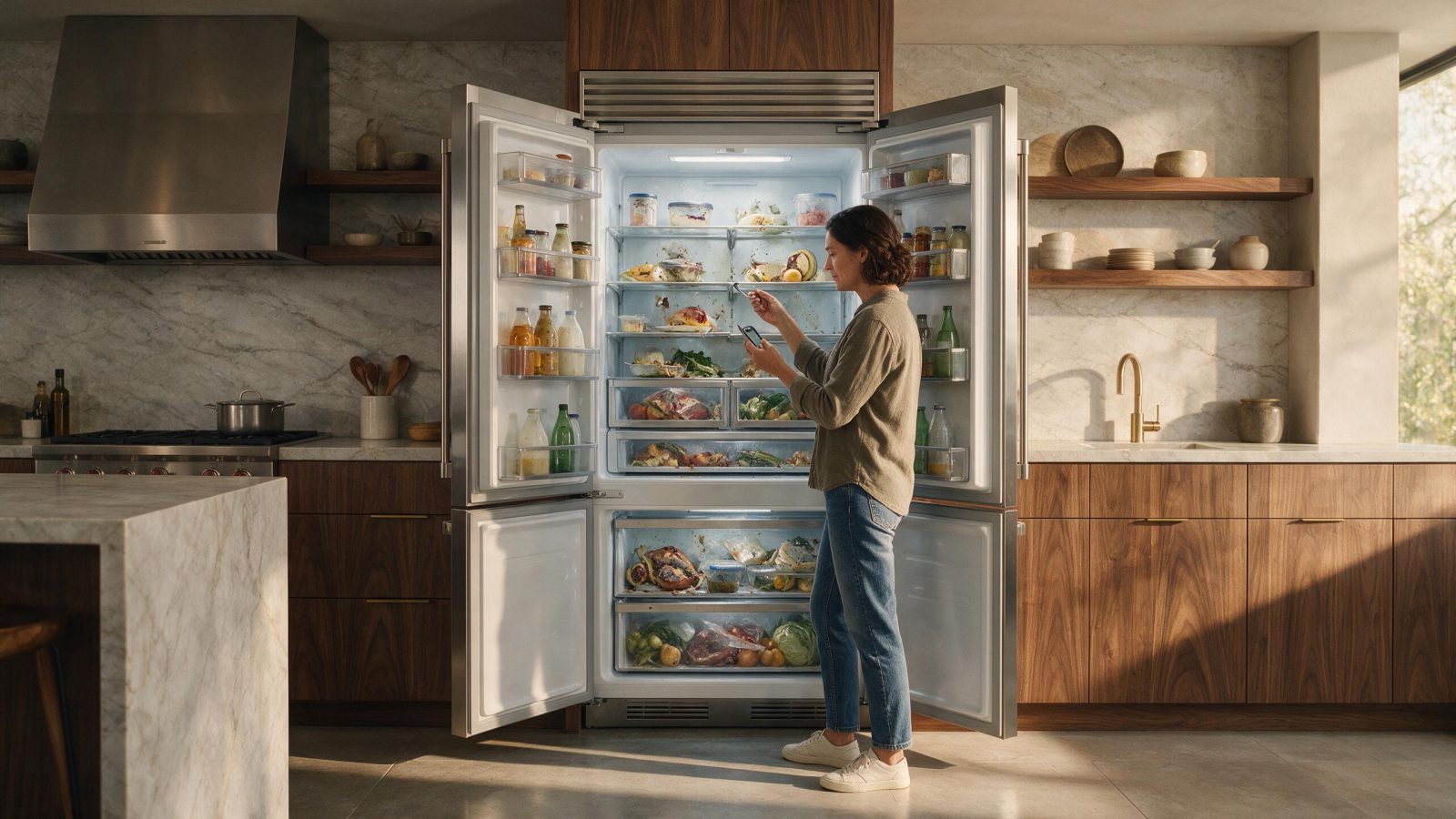

Safe first checks for a Sub-Zero refrigerator that is warm or no longer maintaining its set temperature.
A Sub-Zero refrigerator that feels warm does not always have a failed compressor. Door sealing, recent loading, blocked airflow, an incorrect setpoint, or a dirty condenser can all produce the same symptom. The useful first step is to confirm what the unit is actually doing before assuming a major cooling failure.
Sub-Zero generally recommends 38°F (3°C) for the refrigerator section and 0°F (-18°C) for the freezer on electronic-control models. After a setting change, door issue, condenser cleaning, or large grocery load, give the unit time to stabilize instead of judging performance from a few minutes of operation.
Check the displayed setpoint first, then consider whether only the refrigerator section is warm or whether every compartment is affected. That distinction matters because a single warm section can point toward airflow, a fan, a sensor, or a section-specific control issue, while a whole-unit problem can involve power, condenser airflow, or the refrigeration system.
A condenser covered with dust or pet hair cannot reject heat as effectively. If condenser maintenance is due, clean it using the procedure for the exact model. A soft-brush vacuum attachment is usually appropriate; chemical condenser cleaners are not needed, and the aluminum fins should not be bent.
Also think about recent use. A long-open door, a large load of warm groceries, or frequent door openings can temporarily raise cabinet temperature. Once the cause is corrected, allow up to 24 hours for the temperature to settle.
If the door seals correctly, airflow is clear, the condenser is clean, and the unit still cannot maintain temperature, the cause may be a fan, thermistor or control issue, or a sealed-system problem involving the compressor, evaporator, or refrigerant circuit. Those are diagnosis jobs rather than owner maintenance.
Do not remove electrical covers, bypass door or fan switches, or open the sealed refrigeration system. Record the full model number, current temperatures, any error message, and whether one or both compartments are affected before arranging service.
Move perishable food to reliable cold storage if the compartment is clearly outside a safe food-storage range. If the unit is getting warmer, repeatedly displays a service message, trips a breaker, smells hot or electrical, or shows no improvement after the basic checks, professional diagnosis is the appropriate next step.
Allow about 24 hours for the cabinet to stabilize after a setpoint change or after correcting a door or airflow problem.
Yes. Restricted condenser airflow can increase run time and contribute to elevated temperatures, which is why periodic condenser cleaning is part of normal maintenance.
That pattern can indicate a refrigerator-side airflow, fan, sensor, or control problem rather than a total loss of refrigeration. A technician can narrow it down after the owner-safe checks are complete.
If the symptom continues after the owner-safe checks above, schedule a professional diagnosis. You can also review our Sub-Zero repair services before booking.
Food freezing in the refrigerator section is usually a control or airflow problem—not a reason to keep raising the setpoint blindly.
Do not condemn a Sub-Zero compressor based on sound or run time alone. Several simpler faults can produce the same symptoms.
Separate normal short-term temperature movement from a refrigerator that truly cannot hold its setpoint.
Share a few details and we’ll confirm an appointment. Prefer to talk? Call us and we’ll help right away.
Fields marked with * are required.